
Why the Yorskhire Moorland is the Place to Be
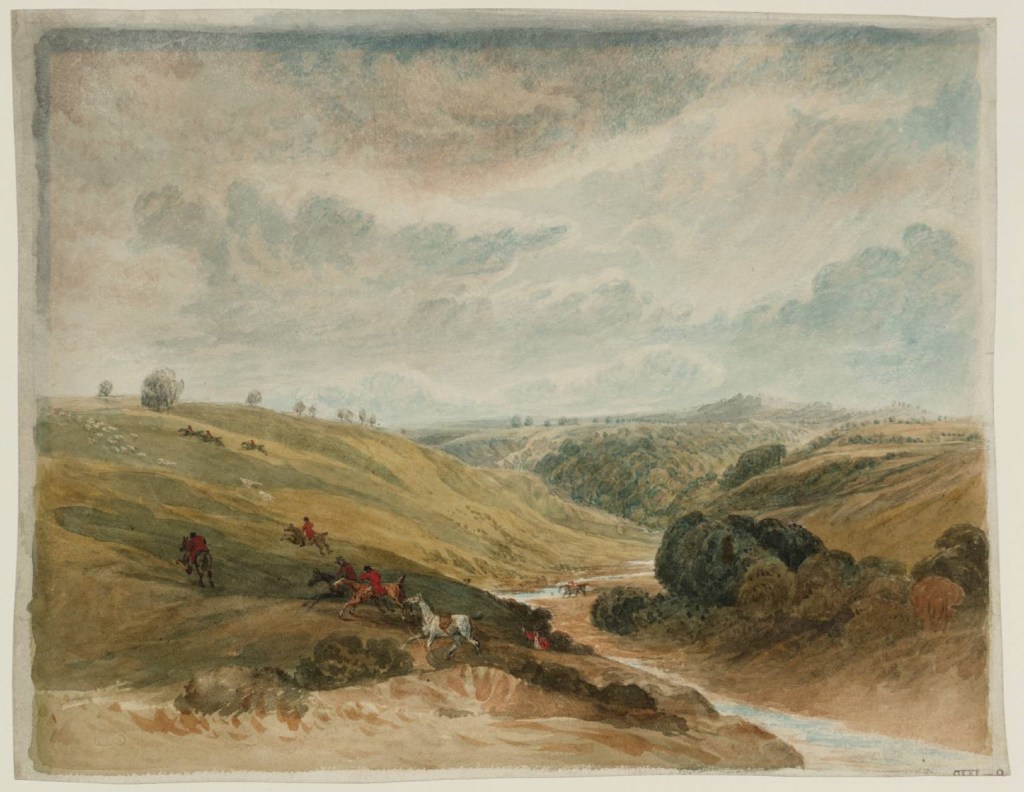
Here is my love story, or how the Yorkshire moors have conquered my heart.
When I found myself wandering on the moors for the first time, I was gazing at the whole universe.
What is primarily conspicuous is the endlessness of the place. The rolling hills are sufficiently high to make you feel insignificant but not enough to prevent you from accessing the infinity of the horizon. You can try your best without never being able to perceive the edge of the moors. Let the thrill conquer your soul while you hike in the Rosedale Moor, among a perfect continuum of pure greenery. The moors expand on all sides so that you feel trapped in this spectrum of diversities. Wherever you ramble, the surprise of a new hill paradoxically plunges you into a familiar environment. You feel at home in this majestic landscape.
What inspires closeness and respect is the sensation of going back in time.
These moors are alike in their peculiar singularities, as they all bear the legacy of intemporal legends and tales. Every time you discover a new place, you cannot help being profoundly moved by the heritage which permeates the landscape. Have a walk in the Ilkley Moors, climb up to the Cow and Calf rocks – respectively an outcrop and a boulder – and you will be stricken by the history of the giant Rombald, at the origin of the split between the Cow and the Calf. It is breathtaking to realise that they were present long before the first traces of any form of life, as some silent observers of the evolution of the world. Therefore, their very essence is endlessly marked by the passing of time, yet their everchanging characteristics allow us to inscribe them in the tradition of natural refinements.
Once you have had the chance to lose yourself in the moors, your visual senses are transcended forever.
Either the radiance of the pine forests or the bright colours of the blooming flowers catch your sight through a mesmerizing patchwork of colours. Despite the capricious British weather, the sunlight always finds its way to be reflected upon the moors and to enhance them. You are now witnessing an idealistic vision of nature which is usually found only in paintings. This landscape never ceases to inspire artists: you can be equally impressed by the astonishing realism of James McGairy’s aquarelles of the moorland or the personal perceptions of Janette Boskett through her surrealist oil paintings.
The moors belong to everyone, and to no one.
Their very openness unifies people, as nature knows no social or financial distinctions. Its simple altruism frees you from any life constraints and allows you to dig into the depths of your inner self. The invigorating air of the moors delivers you key tools to your own understanding and the true communion of your very person. By appreciating the moorland, you learn how to love yourself. By translating the language of the moorland, you add your voice to the collection of interpretations through time. This empowerment is individual, yet comprehensive and universal. This apprenticeship is made possible through the peaceful and humble silence of the place.
The absence of noises awakens the poetry buried in us all.
The moorland has always been a great source of fascination for every human being who is fortunate enough to admire it. If you extend your discovery to the Yorkshire Dales National Park, the rounded amphitheatre of Malham Cove will arise in yourself a deep feeling of vertigo, exploited in the cinematic world. You probably remember the Harry Potter and the Deathly Hallows’ scene in which Harry and Hermione set up a camp; it is made grandiose thanks to the use of this limestone rock scenery. If you are looking for more serenity, the Aysgarth Falls is what you need. These three waterfalls instantly make you forget all your daily preoccupations, to drive you to a calm state of relaxation. This peaceful environment attracted the famous Romantic poet William Wordsworth, seeking for picturesque and sublime through the contemplation of nature.
The relationship between the observer and the observed is interdependent.
The moorland is a place of redemption for any suffering soul. Yet, the art of people provides a better recognition of the moors. This unique landscape arouses inspiration and encourages any form of reflection as long as you are animated by a creative and imaginative instinct. The dreamier and most uplifting place must be Haworth. As you know, Haworth is the Brontë sisters’ village. It is situated at the heart of the moors. How delightful it must have been for the three young girls to wander up and down the hills! If you walk along the pathways, you can even get the chance to hear Emily Brontë whispering to you:
“I know my mountain breezes
Enchant and soothe thee still—
I know my sunshine pleases
Despite thy wayward will.”
(“Shall Earth No More Inspire Thee”, 1841)
 PLUTO
PLUTO 
Leave a comment